Search

2025

Treated Fresh Air Handling Units (TFA)

DRI’s Treated Fresh Air Handling Units (TFA) are the most sought-after product for improving IAQ within large enclosed buildings. It comes with the proficiency to thoroughly ventilate the space while driving energy efficiency in the facility at the same time.

EcoFresh Molecular Sieve Coated Heat Wheel is integrated into TFA units for facilitating the achievement of good IAQ and energy saving in a single unit. There is a flexibility of adding modules as well for enabling cooling, heating, humidification, high-efficiency filtration, mixing, sound attenuation, etc.

The system allows easy maintenance and resides well for free, reliable operation. Similarly, even the filter & fan assembly requires minimal maintenance. Elaborating on the salient features, TFA incorporates standard filters – exhibits innovative design for connection system and offers a wide range of options, making it the ideal choice for hospitals, hotels, malls, offices, airports, educational institutes, pharma facilities, cold storages, and all air-conditioned spaces.

The pioneering system is capable of driving various functions in the same casing. It offers the widest range of air quantities, TFA deploys the best technology for casing manufacturing, and are AHRI certified. 

The machine is highly advanced to demonstrate impressively low pressure drops across all components coils, heat exchangers, etc. to provide the lowest possible pressure drop in proportion to the highest possible efficiency, resulting in very low LCC.

Altogether, the TFA system is ideal for fresh air solutions in a conditioned space that not just enhances the IAQ but promotes energy saving as well. As a result, it is adept at meeting ventilation standards effectively while abstaining from increasing the energy cost in the process. The ability to precondition the incoming fresh air all year round significantly contributes to reducing the system capacity by 30 to 65%. Consequently, the systems go a long way in maintaining optimal humidity levels without incurring additional cost.

Dedicated Outdoor Air Systems (DOAS)

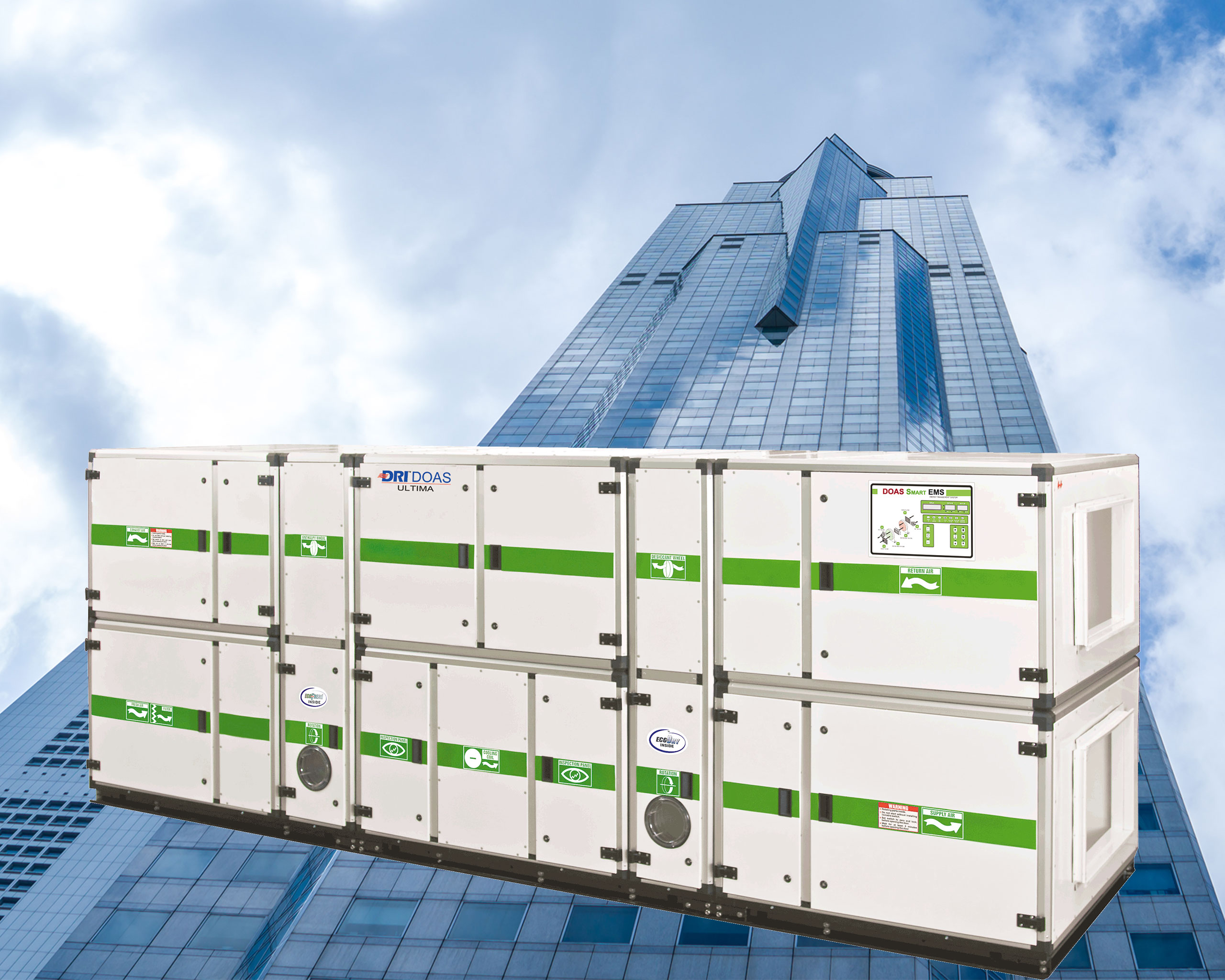
DOAS ULTIMA is one of the pioneering developments of DRI that allows designers to provide ultimate fresh air ventilation as a single source responsibly. It is a unitized Fresh Air Management System that enables handling of moisture load by utilizing Ventilation Air.

DOAS consists of highest recovery Enthalpy Wheels, EcoFresh, and patented Passive Desiccant Wheels, which promote the achievement of lower dew points, and that too without requiring a DX system. The Patented Desiccant Wheels support a unique configuration that conducts regeneration without requiring any active energy.

The system is proficient at providing fresh air at low Dew Points using chilled water coils. DOAS works on the mechanism of handling fresh air load and the room’s internal latent load by decoupling them from the internal sensible load. Here, the sensible load is majorly managed by a parallel – terminal unit/system. At the same time, the system removes moisture from a saturated air stream without heat/thermal regeneration.

DOAS is specifically designed to meet the international standards and goes a long way in driving energy savings of upto 55%. The advanced technology is highly preferred in offices, hospitality sector, hotels, malls, hospitals, etc. for its ability to improve the IEQ.  
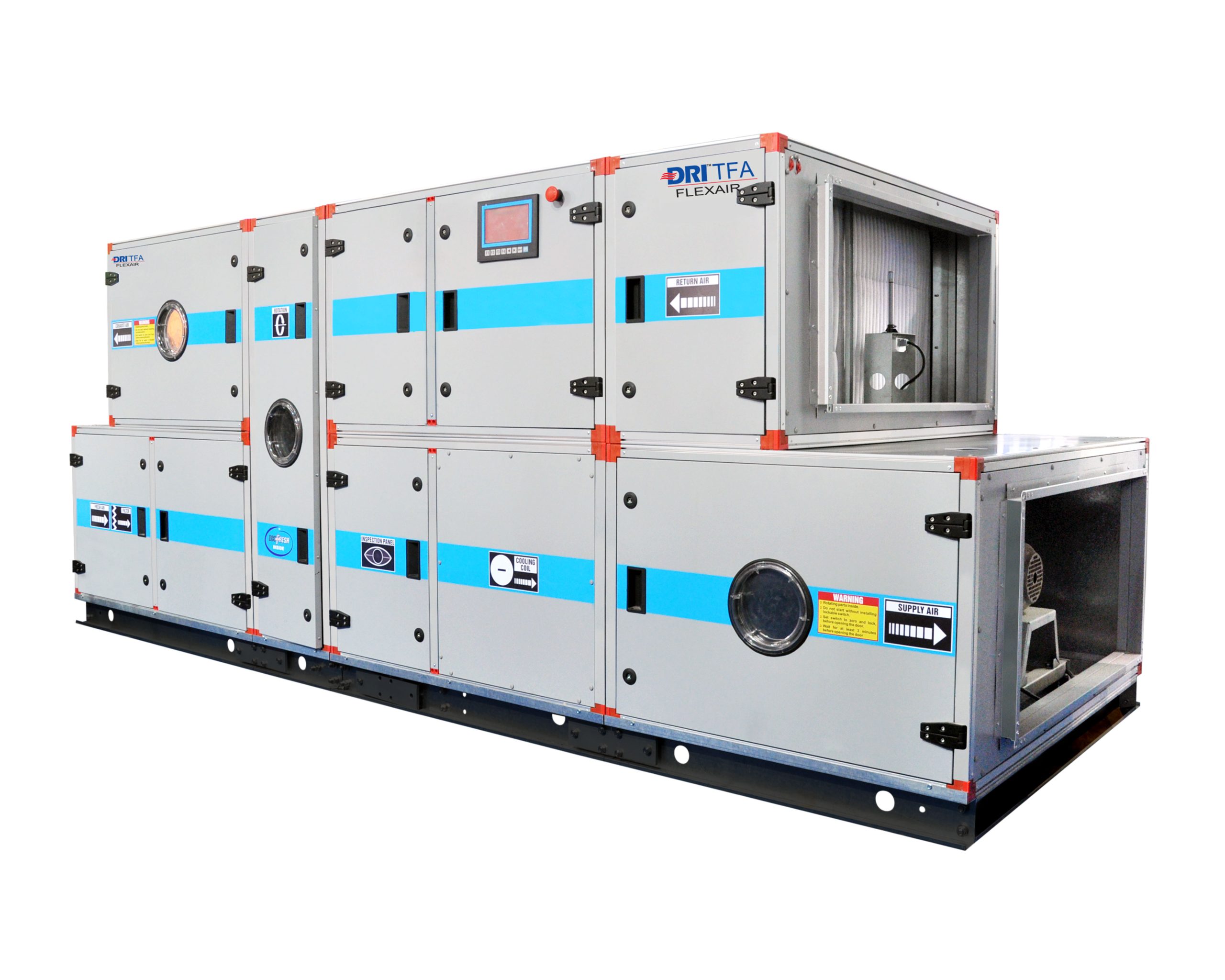
DRI has unveiled its latest solutions for indoor air quality (IAQ) and energy-efficient ventilation in large enclosed buildings: the Treated Fresh Air Handling Units (TFA) and Dedicated Outdoor Air Systems (DOAS)…

The TFA units integrate EcoFresh Molecular Sieve Coated Heat Wheels to deliver optimal IAQ while promoting energy savings. The modular design allows additional functions such as cooling, heating, humidification, high-efficiency filtration, mixing, and sound attenuation. Maintenance is minimal, with standard filters and fan assemblies designed for reliability and ease of service. TFA units, AHRI certified and engineered with low-pressure-drop components, are suitable for hospitals, hotels, malls, offices, airports, educational institutions, pharma facilities, cold storages, and all air-conditioned spaces. By preconditioning incoming fresh air year-round, the system can reduce system capacity by 30–65% while maintaining optimal humidity levels and controlling energy costs.

DRI’s DOAS ULTIMA system provides a unitised approach to fresh air management, handling moisture loads effectively with the help of high-recovery Enthalpy Wheels, EcoFresh, and patented Passive Desiccant Wheels. This technology allows low dew point delivery without the need for a DX system or active energy regeneration. By decoupling internal latent loads from sensible loads, DOAS improves IEQ while enabling energy savings of up to 55%. The system is particularly suited for offices, hospitality establishments, hotels, malls, and hospitals.

Together, DRI’s TFA and DOAS solutions represent a comprehensive approach to achieving high IAQ standards and energy efficiency in conditioned spaces.

Sustainable practices have become an integral part of the industries, showcasing them more in the light of responsible companies. However, given the nature of operations being carried out involving large-scale manufacturing or energy-intensive processes in the form of heating, cooling, and monitoring the internal environment can take a toll on the climate. By default, the industrial operations immensely contribute to carbon emissions while being huge energy guzzlers and account for resource depletion in the process.

Desiccant Rotors International (DRI) leads the league in offering sustainable climate control solutions in the realm of the HVAC industry. It is diligently focused on providing breakthrough solutions for controlling indoor air quality and climate. In addition to this, being perceptive of the ongoing developments and the environmental impact of the industries, it has created a niche for itself in providing energy-efficient and sustainable solutions.

Specializing in improving the air quality within industrial facilities, DRI offers a range of Fresh Air Ventilation systems aimed at achieving acceptable ventilation within the space. The Air Handling Units (AHU) comprising Treated Fresh Air Units (TFA) and Dedicated Outdoor Air Systems (DOAS), are the major highlights of the house. They are primarily deployed in the industrial facility to ensure the supply of fresh air into the room while efficiently capping the energy consumption in the process. Thereby, they achieve the two-fold task of enhancing the indoor air quality and reducing the operational cost of the facility.

Delving into the benefits of TFA, the systems achieve the highest ventilation standards by preconditioning the incoming fresh air to provide excellent indoor air quality (IAQ). The systems come with the proficiency to mitigate pollutants, allergens, and contaminants, where they conduct the filtration and treatment of air before introducing it into the space. As a result, they come in handy for curtailing the spreading of airborne diseases by driving a continuous supply of clean and healthy air. In addition to this, TFA goes a long way in recovering the sensible and latent energy with the help of energy recovery wheels, offering a host of benefits in the form of improved IAQ, humidity control, and huge energy savings.

Simultaneously, it also reduces the requirement for overall system capacity where it is adept at handling and distributing the air for depleting the demand of heating, ventilation, and air conditioning (HVAC) systems. This plays a crucial role in decreasing the overall load on the system, translating to reduced operational cost and energy consumption of the systems.

To monitor humidity, DRI also offers Dedicated Outdoor Air Systems (DOAS) that also bode well for adequate ventilation of space with the removal of indoor air pollutants. Being well equipped with unique passive dehumidification wheels, it thoroughly manages relative humidity (RH) levels that amplify the energy recovery efficiency and curtail cross-contamination as well. Resisting the growth of mold, unpleasant odors, and discomfort due to uncontrolled moisture, it actively replenishes the facility with fresh air. Altogether, the systems offer a comprehensive solution aimed at boosting the air quality of the space.

Similarly, Chilled Beams, primarily recognised as room air recirculation devices, have been specifically devised to cool and ventilate the space. They ensure the comfort of people occupying the space and yield good air quality for them. When it works in combination with DOAS, it steers the energy-efficient operation of the system. Chilled Beams curtail the energy consumption by 20-25% in contrast to traditional systems, emerging as the most energy-efficient solution.

Likewise, Energy Recovery Ventilators (ERVs) allow remarkable energy savings when working towards maintaining good air quality within the enclosed space. Well equipped with EcoFresh Energy Recovery Wheels, the system drives the recovery of both sensible and latent energy, resulting in high energy transfer efficiency.

Drawing parallels from competitive solutions offered by DRI, it can be established that the company is committed to achieving the overarching goal of a greener future. With strong roots in innovation, it boasts intensive research and development with a focus on curating advanced technologies that exhibit unmatched performance and contribute to the sustainability of the systems at the same time. It is well aligned to gauge the emerging industrial dynamics and introduce next-generation solutions accordingly.

Driven by the purpose of reducing the environmental impact, DRI itself incorporates sustainability into its practices, where one of its facilities in Manesar has been accredited with Platinum Certified Green Factory Building. Therefore, DRI is at the forefront of reducing, reusing, and recycling resources, which is in tandem with curbing resource wastage aimed at contributing to sustainable growth.

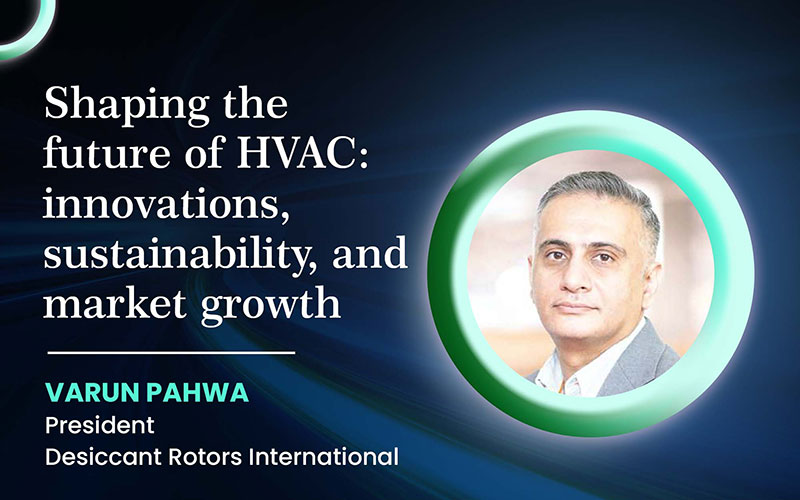
The HVAC industry is evolving with a strong focus on energy efficiency, indoor air quality, and sustainable solutions. Varun Pahwa, President at Desiccant Rotors International, discusses advancements, the role of low-GWP refrigerants, and how cutting-edge technology is shaping building management for a greener future.

How do you perceive the HVAC industry in 2025?

The HVAC landscape looks promising for 2025 and beyond, majorly fuelled by infrastructure development. The growth in construction and rise of buildings are boosting the demand for the HVAC industry, further supported by the proliferation of hypermarkets and the flourishing of more shopping complexes and malls. On account of this, the HVAC sector is very likely to grow at a phenomenal rate, with WebFx expecting the global market to exceed $367 billion by 2030, projecting a CAGR of 3.9 percent between the forecasted period of 2020 and 2030.

What latest advancements have taken place in your expertise field within the HVAC industry?

With sustainability at its core, the advancement of the HVAC sector majorly hinges on energy-efficient solutions. Companies are adapting to new energy efficiency regulations with alacrity, focusing on R&D to implement safe energy and cost-effective HVAC solutions. Due to this, the HVAC players ensure certifications of Seasonal Energy Efficiency Ratio 2 (SEER) and Heating Seasonal Performance Factor 2 (HSPF) systems to comply with industry standards.

In addition to energy efficiency, the sector is influenced by the rising demand for improved indoor air quality (IAQ). With consumers becoming aware of IAQ and the impact of indoor air pollutants on the health of occupants, it is the need of the hour to innovate for advanced filtration technologies and incorporate best practices to provide improved IAQ.

Along similar lines, we at DRI offer Treated Fresh Air Handling (TFA) systems to fulfil the ventilation standards and achieve excellent IAQ by preconditioning the incoming fresh air. These systems conduct the filtration and treatment of air to eliminate pollutants, allergens, and contaminants before the air is introduced to the enclosed space. The systems bode well for the continuous supply of clean and healthy air and go a step further by incorporating energy recovery wheels to recover both sensible and latent energy, facilitating energy saving while improving IAQ and controlling humidity.

How do low-GWP refrigerants help reduce greenhouse gas emissions?

HVAC systems with high global warming potential (GWP) invariably increase greenhouse gases, triggering climate change. The very common hydrofluorocarbons (HFC) used in the systems can be considered an environmental threat, so transitioning to low GWP can significantly offer eco-friendly solutions.

Opting for natural refrigerants like hydrocarbons, carbon dioxide, ammonia, HFOs (Hydrofluoroolefins), etc., can reduce carbon emissions and exercise the economy in terms of energy usage. Taking the offering a step further, industry players are also focusing on bringing about the confluence of HFOs and HFCs to amplify the mitigation of GWP.

How can design and technology improve building management and the built environment?

Integrating advanced technologies in HVAC systems can significantly enhance buildings’ performance. Variable frequency drives (VFDs) facilitate precise system control and oversee energy consumption modulation. Similarly, energy recovery ventilators (ERVs) drive optimal ventilation, enabling heat and humidity exchange between incoming and outgoing air. Moreover, installing smart technologies in building automation systems employs energy management strategies that monitor and regulate the systems based on occupancy patterns. In the process, AI and IoT-driven systems utilize the data points to enable centralized monitoring.

What do you look for during ACREX 2025?

Ever since the inception of ACREX, we have been active participants in every edition. Considering that it is the biggest exhibition in the HVAC sector, even this year, we look forward to expanding our networking with the event. It will open the gateway for tapping the potential target audience and showcase our advanced technologies catering to the evolving needs of the industry.

The onset of winter marks a significant rise in air pollution. Every year, there is profound deterioration in the quality of air during the period, and this year as well, the AQI of the capital city plunged to the ‘severe category’ for eight consecutive days. Though the pollution levels have reduced in the past few days, with AQI improving marginally to 310 as per the Central Pollution Control Board records, the vulnerability to pollution still persists in the city. Additionally, experts have shown concerns about the quality slipping back to the severe category with hazy conditions still prevailing in major parts of the city and its adjoining areas.

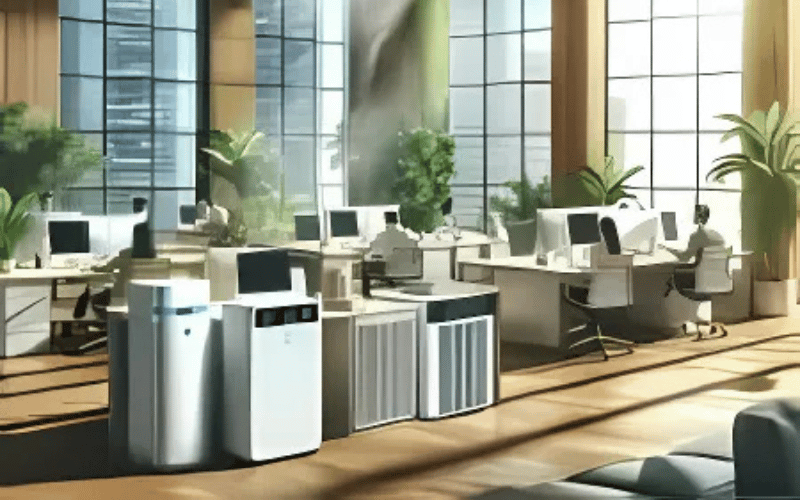
With the capital city striving to counter the air pollution, it is important to understand that the impact is not just limited to outside but is also responsible for influencing the air quality within the enclosed spaces. The worst affected are commercial and industrial spaces facing the challenge of poor indoor air quality (IAQ) as contaminated air remains trapped within the space. Given the large and complex structure of these spaces, such as offices, schools, airports, hotels, etc., they are often marked by excessive buildup of pollutants, dust, and allergens due to packed buildings. This in turn leads to a hike in levels of PM2.5, PM10, carbon dioxide, VOCs, etc., giving rise to a range of respiratory problems such as bronchitis, asthma, and lung inflammation, along with cardiovascular issues and neurological disorders in a person. Moreover, as per the study by IIT Kanpur, the level of PM 2.5 peaks during the month of November, where the pattern continues in December as well, with pollution still being a matter of concern. With PM 2.5 levels surpassing the mark of 1000 in the 3rd week of November, it becomes essential to improve the IAQ of the large spaces. Furthermore, long-term exposure to poor IAQ has also been linked to the development of a condition called Sick Building Syndrome (SBS) among the occupants. In this condition, people complain about issues such as fatigue, headaches, lethargy, nausea, wheezing, throat irritation, etc. In addition to this, SBS is also responsible for reduced productivity and absenteeism in the person, as unhealthy indoor air can also affect the physical and mental well-being of people. However, given the inherently complicated structure of commercial and industrial spaces, improving the IAQ cannot be done alone and requires the intervention of advanced technologies. Here, installing Air Purification Systems (APS) can come in handy for maintaining good IAQ across the space by conducting the removal of outdoor air pollutants at the source itself. It offers a proactive solution with the help of a “beginning-of-the-tube” system where purification of air is performed at the source by harnessing the benefits of advanced filtration technologies. The APS systems exercise an edge over the other standard air purifiers by purging the air before it enters the facility rather than treating the outdoor air inside the building, risking the mixture of outside contaminated air with the indoor environment. In order to address the air quality issues proficiently, the APS systems employ innovative solutions in the form of honeycomb-designed chemical filters. They conduct 100% elimination of gaseous contaminants before they infiltrate indoor spaces and check the entry of harmful particulate and gaseous pollutants at multiple levels. To further fortify the process, the systems also prevent the infiltration of contaminated air into the building by maintaining positive pressure across the space. Along with this, it ensures thorough cleaning of outside air, making use of proper particulate and chemical filtration. Looking at the health repercussions of poor IAQ in large spaces, adopting advanced Air Purification Systems can go a long way in curtailing the contamination of air indoors. With rising outdoor air pollution, these systems play a crucial role in improving indoor air quality in commercial and industrial spaces by effectively preventing pollutants from entering the indoor environment.

whatsapp_avatar

DRI Support
Online

For assistance, please enter your email and phone number below.
×
Chat with Us
whatsapp_avatar

DRI Support
Online

For assistance, please enter your email and phone number below.
×
Chat with Us